
Why Stepping Back is the Real Work in Early Childhood Education
From the outside, it can look like we’re doing very little.
Kids are climbing. Digging. Dragging sticks. Arguing over whose turn it is. Making rules. Changing them halfway through.
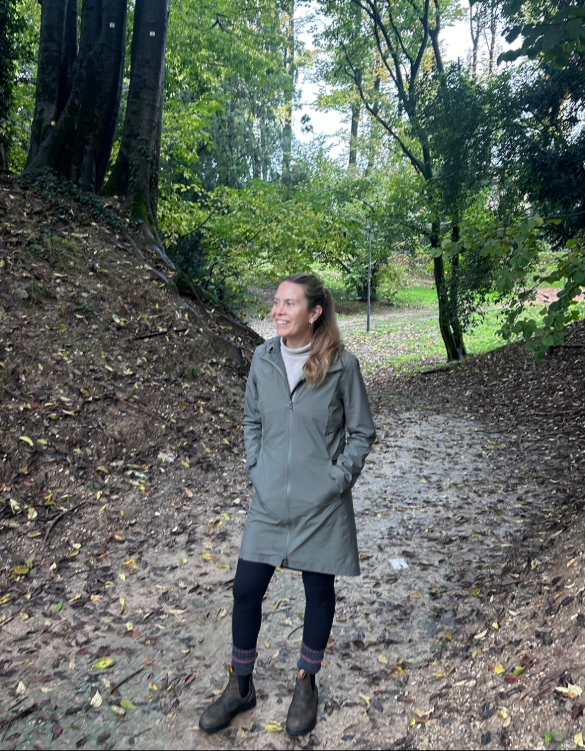
And nearby, an adult is standing there.
Hands in pockets.
Leaning on a tree.
Watching.
You can almost hear the questions:
Why isn’t she stepping in?
Is anyone actually teaching here?
Are they just letting kids do whatever they want?
They’re fair questions.
We’re used to adults proving their value by intervening.
Saying something.
Fixing something.
Moving things along.
But that’s not always the work.
A lot of days, the real question isn’t
What should I be teaching right now?
It’s
What’s actually happening here?
And
Would stepping in help or would it just make this easier for me?
A REAL LIFE EXPERIENCE:
A few weeks ago, a group of kids got into it over a sled.
Voices got louder.
The sled was pulled back and forth.
Someone yelled that it was their turn.
Another kid walked away, clearly upset.
Every part of me knew the usual script. I memorized it while teaching in the system years ago!
We need to share.
Take turns.
Hands off.
And I didn’t use it.
I stayed close enough to see what was happening. Who was getting overwhelmed, who was escalating, and whether anyone was going to get hurt.
A minute later, the kid who walked away came back. Someone suggested a different way to use the sled. Someone else agreed. It wasn’t neat. It wasn’t calm right away. But it moved forward.
From the outside, it probably looked like nothing happened.
Kids arguing over a sled.
But a lot happened.
This is the part that’s hard to explain.
Stepping back isn’t the absence of work.
It is the work.
When it looks like we’re “doing nothing,” we’re paying attention.
Who’s holding the power.
Who’s getting pushed out.
Who’s close to losing it.
Whether the risk here is real or just uncomfortable.
If you do this kind of work, you know this tension.
Holding yourself back.
Letting it stay uncomfortable for a bit.
Trusting kids instead of stepping in to manage it.
Not every conflict needs you.
Not every risk needs to be stopped.
Not every hard moment is a problem.
A lot of the work happens quietly.
Sometimes it happens later when you’re replaying the moment in your head.
Sometimes it happens in a quick check-in with a colleague.
Sometimes it’s a conversation with a parent that helps them see what you saw.
It doesn’t always happen right there in the moment.
This way of working is easy to misunderstand because it doesn’t look busy.
There’s no script.
No checklist.
No clear “outcome” by lunchtime.
But over time, you see it.
Kids who trust themselves.
Kids who can stay in disagreement without falling apart.
Kids who know how to test their limits and listen to their bodies.
Kids who don’t need an adult to solve everything for them.
That doesn’t happen by accident.
These Educators are doing the kind of work that doesn’t announce itself. And it matters.
At In the Forest Learning, we don’t believe kids need us to run their play.
They need us to respect it.
And to take our role inside it seriously.
If this sounds familiar, you’re not alone.
Whether you work inside the system or outside it, there’s a place to keep having these conversations.
If this resonates, you’ll probably feel at home here.
With Care,
Sarah,

